

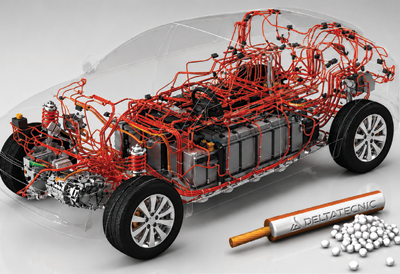
Why Cable Colors and Materials are Critical for Electrification of Vehicles
In an EV, not all cables perform the same job or operate under the same conditions. In-cabin cables (used for sensors, controls and electronic systems) typically work in relatively stable environments. High-voltage cables, however, which connect the battery to the motor or enable fast charging, operate at temperatures that can exceed 150°C.
That difference forces manufacturers to work with highly specialized materials capable of maintaining electrical and mechanical properties over thousands of hours of use. ISO 6722 classifies these cables by thermal resistance, from standard applications up to environments reaching 200°C. Across that range, materials vary from PVC in basic applications, to polyolefins such as PP or PE at intermediate levels, and fluoropolymers such as ETFE or FEP in the most demanding scenarios – precisely the ones gaining relevance as electrification advances.