Articles

Articles

ArticlesEmphasisFeaturedMagnetic Wire

Review on Solventless Magnet Wire Lubrication by Means of Wax-Impregnated Textile Yarn

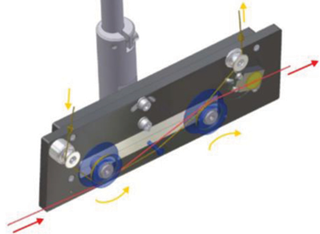
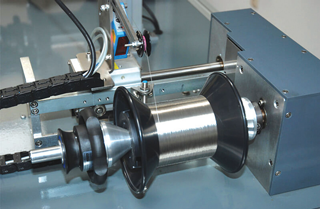
Mechanics of Magnet Wire Handling – Imagine an enameled wire, which is pressed to a plane with a load Fz, the friction force to overcome in order to move the wire is a function of Fz. For dry, solid sliding surfaces, the friction force is independent of the speed v of the movement, which is also true for wires lubricated with wax or wax-like materials. Lubrication with oil or grease results in viscous floating, which is dependent on the speed of movement.

Read More
ArticlesFeaturedTech Briefs

New Halogen-Free Flame-Retardant Wire and Cable Jacketing Compounds

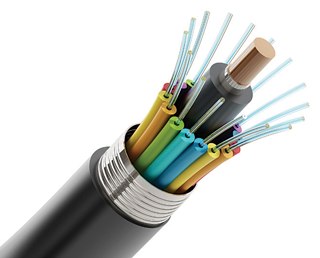
UL has recognized four new Halguard ® low-smoke, flame-retardant jacketing compounds as “halogen-free”, it was recently announced by Teknor \Apex Company, Pawtucket, RI, USA. The compounds include new-generation EVA-based products with an enhanced balance of properties, and highly flexible TPE-based products that exhibit excellent oil and sunlight resistance.

Read More
ArticlesFeatured

Precise Quality Control Directly at the Extruding Line

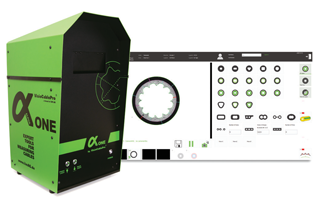
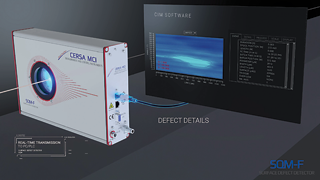
Time efficiency, connectivity and short distances are only a few of the factors, which defi ne modern production and whose optimization always presents manufacturers with new challenges. The new automatic wall thickness and cross-section measuring device, AlphaOne from VisioCablePro® is the perfect complement to the proven all-rounder VCPX5, being a more cost-eff ective alternative that does not have to accept any compromises in terms of quality.

Read More
ArticlesFeaturedSpotlightWipes

Spotlight on Wipes

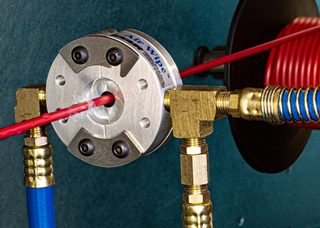
Unwanted liquids can be removed from wire or cable by the use of air or pad wipes. The processes that require wipes include drawing machines, in-line annealers on single and multi-wire drawing machines, extrusion lines (on the exit of the cooling trough), plating, pickling and galvanizing. The liquids that need to be removed from the wire or cable include rinse or cooling water, lubricant, quench, acid, flux and more. Not only is it important to remove the liquid from the wire or cable product, but it is desirable to keep one liquid from contaminating downstream portions of in-line processes. There are two main types of wipes used in the wire and cable industry, pad and air, which are detailed in the following sections

Read More
ArticlesFeatured

Cutting-Edge Heat Stabilizers for PVC Wire & Cable

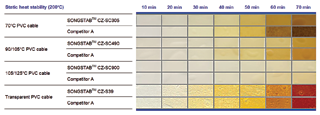
In the past, most heat stabilizers for PVC wire and cables were lead-based. As awareness of safety and health issues grows around the world, health and environmental regulations are becoming more and more stringent every day. The European Chemical Agency (ECHA) notes in a risk management option analysis (RMOA) that lead and lead compounds are classified under the CLP Regulation as category 1A substances toxic to reproduction, toxic following prolonged and repeated exposure, and hazardous to aquatic life. Lead stabilizers are therefore now banned for various applications in many countries and have been replaced by alternatives

Read More
ArticlesWHCC

Turning Recycling into Circularity

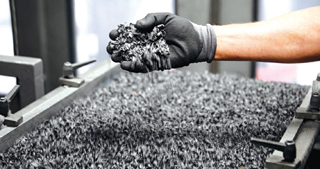
In the 1960s, with no environmental requirements, nor regulations, NKT A/S, located in Brøndby, Denmark, pioneered the first methods to recycle cable scrap. And for more than 50 years has developed best practice processes for cable scrap recycling. And the legacy of cable scrap recycling continues at NKT to this day, ensuring the re-use of materials along with the sustainable disposal of nonrecyclable cable components.
The need for recycling of production scrap from power cables has increased steadily over the years, reflecting our society’s increased focus on re-use of the resources

Read More
ArticlesEmphasisHeating & Surface Treatment

Rod Wire Pickling & Phosphating

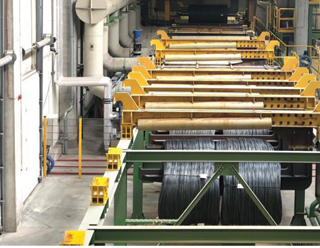
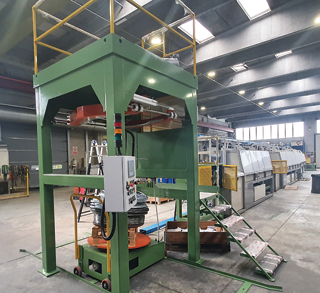
The steel material phosphating process has the purpose to produce a surface conversion layer, at thin and compact thickness strongly anchored on the surface, in order to facilitate the cold deformation or the further drawing operations. It exists with different types of phosphate. For rod wire, the most frequently used is the zinc phosphate. After phosphating, an opportune covering with lubricating layer on the phosphated surface is necessary

Read More
ArticlesEmphasisEquipmentMarking & PrintingShowcaseSpotlight

Spotlight on Marking & Printing

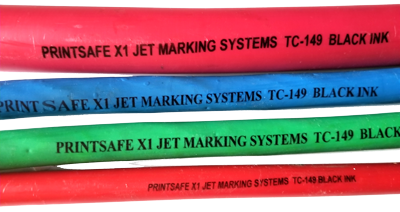
As printing and marking are functions that are used in almost every industry, this sector of wire and cable manufacturing and processing benefits from economies of scale in research, development, manufacturing and service. There are many excellent suppliers to the industry, and state-of-the-art methods, machines, materials and services are available to improve the way you mark and print on wire and cable

Read More
ArticlesEmphasisHeating & Surface Treatment

In-Line Annealing Process – As Important as the wire drawing process itself

Considering the downstream process from rod to fine wire, be it single or multi-wire production, the in-line annealing process is as important as the wire drawing process itself, because it must ensure the required mechanical and electrical properties (elongation, mechanical strength and conductivity), maintain the wire diameter and roundness defined by the final die, and for metal-plated wires, ensure the integrity of the wire coated surface

Read More
« Click here to translate »